What is Himalayan pink salt and where does it come from?
Himalayan pink salt is a natural mineral salt extracted from deposits formed millions of years ago in Pakistan, near the Himalayan mountain range. Unlike regular table salt, it does not undergo industrial refining processes, which allows it to պահպան its original composition. Its characteristic pink color comes from the presence of natural minerals such as iron, calcium, and potassium.
This salt is highly valued in cooking for its purity, natural origin, and its milder, more balanced flavor. In addition, since it contains no additives or anti-caking agents, it is considered a more natural option among gourmet salts.
Differences between coarse and fine Himalayan salt
The main difference between coarse and fine Himalayan salt lies in the grain size and how they are used in cooking.
- Coarse salt: has larger crystals, making it ideal for meats, grilling, baked fish, or brines. It allows for a slower release of flavor.
- Fine salt: dissolves quickly, making it perfect for everyday use, cooking, baking, or directly seasoning dishes.
Both types come from the same salt, but their application varies depending on the recipe and preparation.
Differences between coarse Himalayan salt and regular salt
Coarse Himalayan pink salt and regular salt differ significantly in origin, processing, and composition:
- Origin:
Himalayan salt is a natural mineral salt, while regular salt usually comes from the sea.
- Processing:
Regular salt is industrially refined and may contain additives, whereas Himalayan salt is unrefined.
- Composition:
Pink salt contains small amounts of natural minerals, while regular salt is mainly composed of sodium chloride.
- Flavor:
Himalayan salt offers a milder, less harsh taste compared to traditional salt.
These differences make it a popular choice in gourmet cooking.
Benefits of consuming this type of salt
Himalayan pink salt is appreciated not only for its taste but also for its natural characteristics:
- More natural: contains no additives or industrial refining processes.
- Mineral content: contains trace minerals such as iron, magnesium, and calcium.
- Milder taste: enhances the flavor of food without being overpowering.
- Versatile in cooking: ideal for meats, fish, vegetables, grilling, and brining.
It is important to remember that, although it differs from regular salt, it should still be consumed in moderation as part of a balanced diet.
Buy Himalayan Pink Salt at a good price
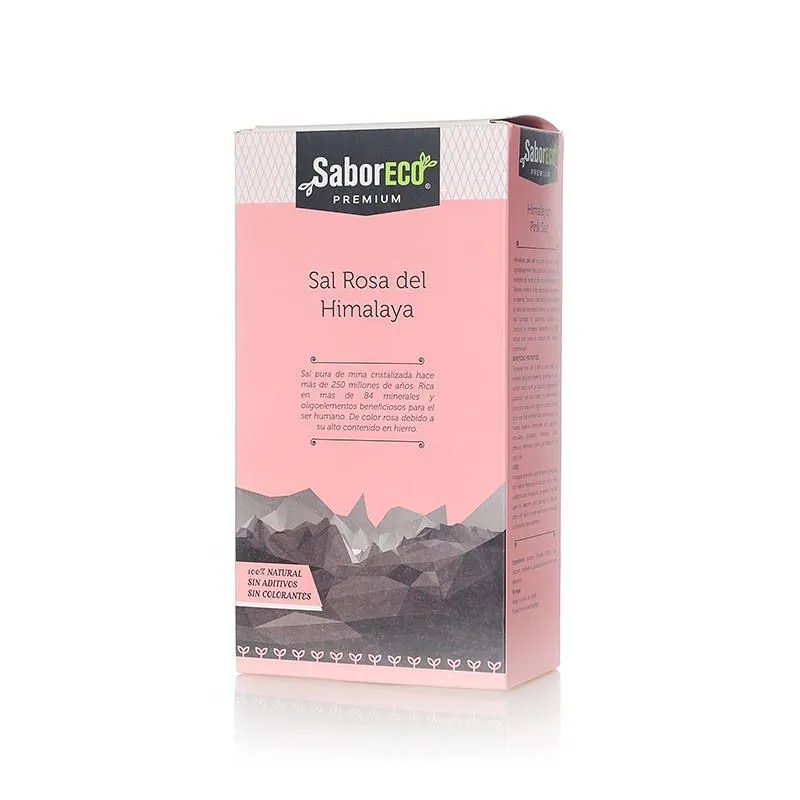
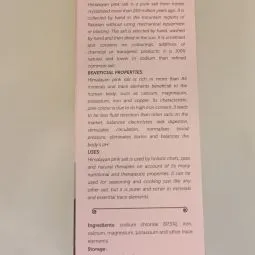
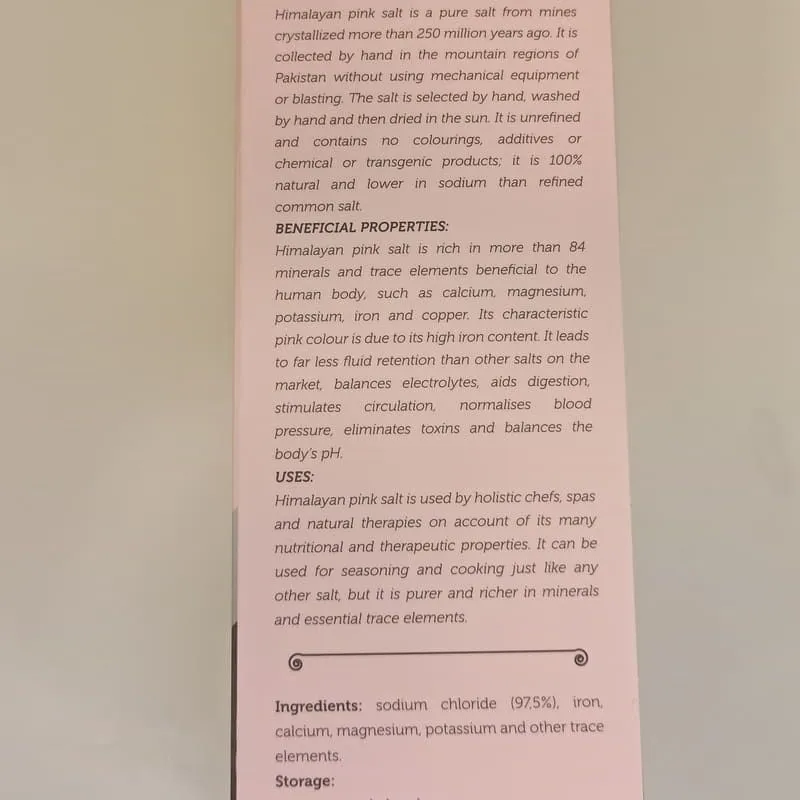
Himalayan pink salt is a pure salt with crystallization dating back more than 250 million years. It is obtained from a mine in the Himalayan region of Pakistan. It is extracted without the use of mechanical tools or explosions. The salt is carefully selected, hand-washed, and sun-dried.
If you are looking for other types of condiments, Gastronomic Spain offers a wide variety of products—feel free to explore the catalog.
Himalayan pink salt has many properties. It contains more than 84 minerals and trace elements beneficial to the human body, such as calcium, magnesium, potassium, iron, and copper. Its pink color is due to its high iron content. It also retains less water than other salts on the market.
This salt is also used in spas and natural therapies due to its many nutritional and therapeutic properties.
1 kg of Himalayan salt